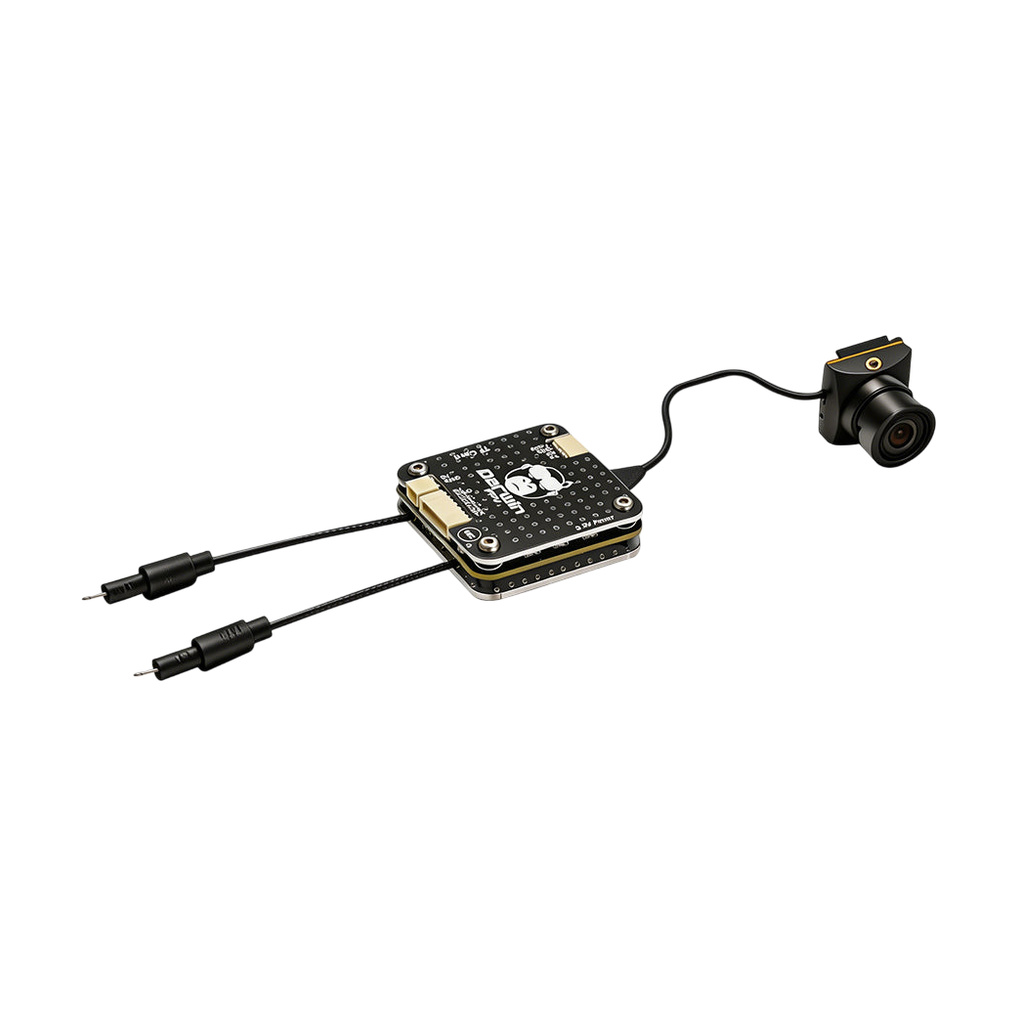
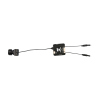
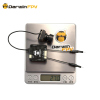
DarwinFPV HiLink HD VTX is a combination of a camera and a digital video transmitter for video transmission in the OpenIPC or RubyFPV system. It is suitable for FPV wings, drones, RC cars and boats. The unit comes with pre-installed APFPV firmware, allowing video to be viewed directly on a mobile phone without an additional receiver or goggles.
OpenIPC and RubyFPV are open-source projects for digital FPV video transmission. They use IP cameras and Wi-Fi modules to build HD video links for RC models with relatively low latency. The projects are often used for experimental or development FPV systems where full control over both hardware and software is required. The HiLink HD VTX is a pre-built and configured unit that makes deployment of the video link much easier.
In the default APFPV mode, the transmitter creates a Wi-Fi network that an Android phone connects to, with video displayed in the PixelPilot app. The range in this mode is 200-500m, which is sufficient for setup, testing and relaxed flying nearby. For longer flights, the unit can be switched to OpenIPC (WFB-NG) or RubyFPV firmware with a ground-side Wi-Fi adapter (sold separately) — the manufacturer states a range of up to 15km in ideal interference-free conditions, although a high-quality antenna setup is required on the receiver side.
The camera uses a Sony IMX415 sensor with an M12 lens and FOV 160°, has a standard Micro (19x19mm) size and is connected to the transmitter via a 130mm MIPI cable. It supports 1080p/60fps, 1080p/90fps and 720p/120fps modes, H.265 or H.264 encoding, and adjustable bitrate. According to the manufacturer, latency is approximately 50ms in 720p/120fps mode; with a phone connected directly, the manufacturer measured around 70ms. Video can be recorded directly on a microSD card up to 256GB in the transmitter, including audio thanks to the built-in microphone. Enabling audio increases latency, so we recommend using it only where sound is truly needed.
The transmitter operates in the 5,8GHz band (5150-5850MHz) with output power up to 29dBm. The board measures 32x32x8,5mm, has 25,5x25,5mm mounting holes for M2 screws, and weighs approximately 28g without antennas. Double-sided heatsinks provide cooling while also protecting the electronics during a crash. A connector for a fan (5V) is available for installation in an enclosed fuselage. Antennas connect via u.FL connectors.
The transmitter can be powered directly from a battery with 7-33V voltage and has a 5V/1A output for powering peripherals. It communicates with the flight controller (Betaflight, iNav, ArduPilot) via UART using the MSP OSD or MAVLink protocol, allowing OSD to be displayed in the video feed. Transmission parameters (power, channel, resolution, bitrate) are configured through the web interface, and firmware is uploaded using the included cable with an RJ45 connector.
Do not power on the video transmitter without an antenna connected. The transmitter gets significantly hot at higher output power — airflow around it is required. Maximum transmit power exceeds the limits permitted in the EU for the 5,8GHz band, so output power must be set in accordance with local regulations.
We recommend OpenIPC and RubyFPV for more technically experienced users. Wi-Fi video links are primarily suitable for FPV wings and drones with GPS stabilization. Due to higher latency, the video link is not suitable for acrobatic freestyle or racing drones.
Hauptmerkmale
- Input voltage: 7-33V
- Power output: 5V/1A
- Sensor: Sony IMX415
- Resolution: 1080p@60fps / 1080p@90fps / 720p@120fps
- FOV: 160°
- Lens: M12
- Camera size: 19x19mm (Micro)
- MIPI cable length: 130mm
- Latency: approx. 50ms (720p@120fps, according to manufacturer)
- Frequency band: 5,8GHz (5150-5850MHz)
- Transmit power: up to 29dBm
- Range: 200-500m (APFPV with phone) / up to 15km (OpenIPC, ideal conditions)
- Supported firmware: APFPV (default), OpenIPC, RubyFPV
- Processor: SigmaStar SSC338Q
- OSD: MSP OSD / MAVLink
- SD card: microSD up to 256GB
- Microphone: yes
- Antenna connector: u.FL
- Antenna: 2dBi
- Operating temperature: -10 to 40°C
- Mounting holes: 25,5x25,5mm (M2)
- Size: 32x32x8,5mm
- Weight: 28g (without antennas)
Die Handbücher
Inhalt
- 1x HiLink HD VTX with camera and antennas
- 1x RJ45 cable
- 1x 4-pin cable
- 2x sticker