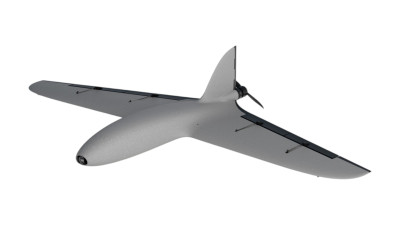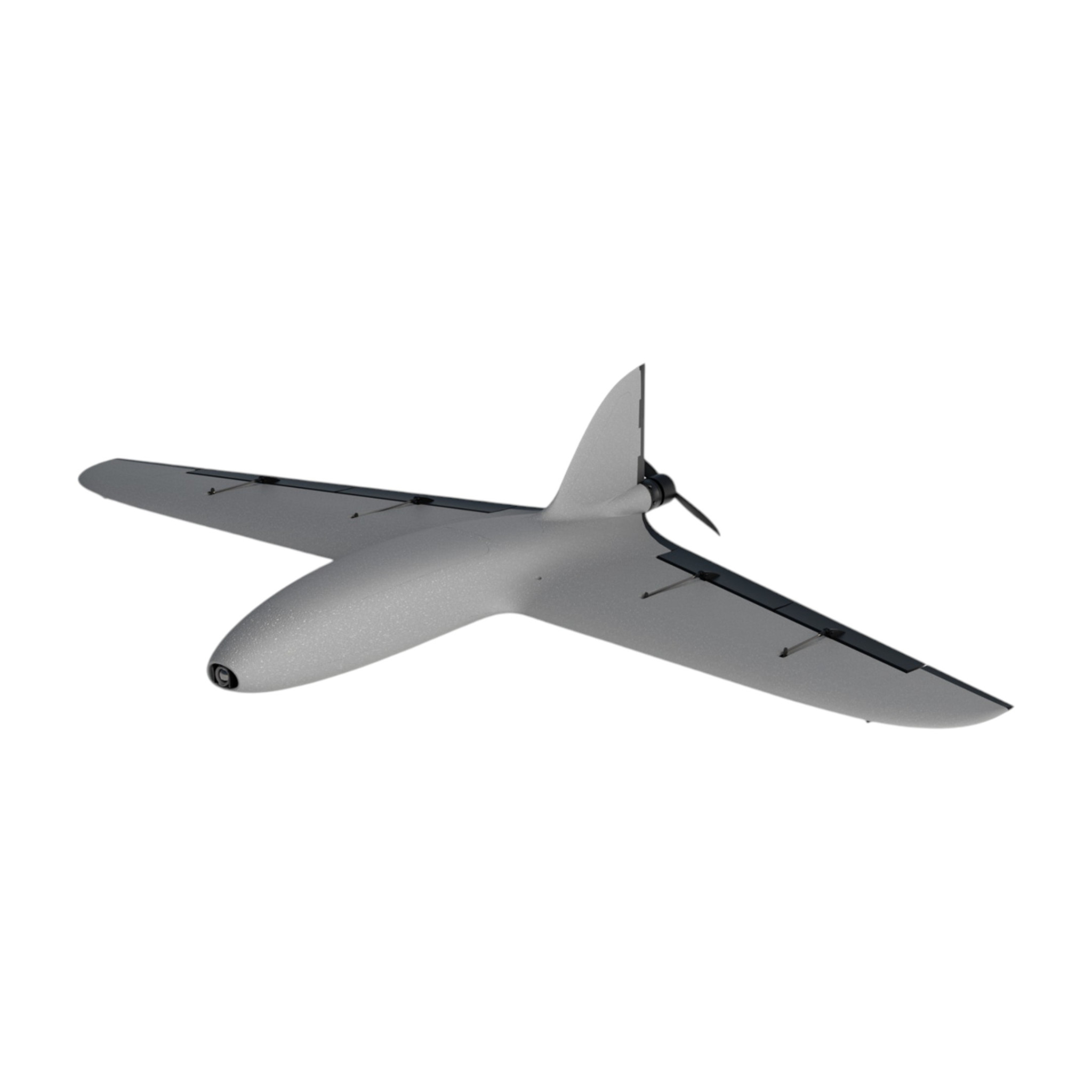
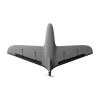
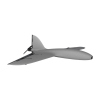
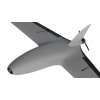
TBS Mojito GT is a 130cm FPV flying wing designed for fast long-range flights and recording FPV adventures. The manufacturer calls it a “grand tourer” among FPV aircraft. It combines high speed with very low power consumption. It is the next evolution of the TBS Mojito family. Based on experience with the smaller TBS Chupito model, compared to the original Mojito it features less leading-edge sweep, higher durability and rigidity, and a simpler design. This makes it quicker to build and better suited for everyday flying.
The aircraft comes as a KIT: it includes a pre-assembled airframe without electronics or servos. A power system, servos, flight controller, RC receiver, FPV system, and battery must be purchased separately. The manufacturer offers the original TBS Mojito GT - Electronics kit for the airframe (sold separately), which includes everything except the RC receiver, FPV system, and battery. With this kit, assembly takes about as long as with the TBS Chupito. Only the receiver, motor connector, and external capacitor need soldering; everything else connects without soldering.
With the stock 6S power system, it reaches up to 250km/h in level flight. With a previous-generation Mojito motor, an 8S battery, and a suitable propeller, it can reach up to 300km/h. However, the most efficient cruising speed is around 120km/h, where it draws only 8-10A. The manufacturer states a flight time of up to 60 minutes and a range of up to 100km. Actual values depend on the battery and equipment installed.
The wing airfoil is based on gliders designed for dynamic soaring (“dynamic soaring”). The control surfaces are split into four (dual elevons), enabling “crow” braking, meaning aerodynamic braking by deflecting the surfaces against each other, as well as other advanced manoeuvres. The trailing edges are made entirely from moulded plastic parts, improving airflow accuracy and reducing drag. The elevons are hollow injection-moulded plastic parts with high rigidity. The servo linkages run outside the wing, making them easily accessible for maintenance. The airframe is made of high-density EPP foam with plastic and carbon reinforcements. Both wings are held in place with a friction-lock and can be easily removed for transport.
The camera, servo, battery, RC receiver, and receiver antenna compartments are pre-cut. RC and FPV electronics are installed in two push-to-open compartments (“push-to-open”). The battery may measure no more than 70x50x230mm. The airframe is ready for DJI O3/O4, Walksnail, and analogue video systems. Flight weight is approx. 2200g and above.
Hauptmerkmale
- Wingspan: 1300mm
- Flight weight: approx. 2200g and above
- Material: high-density EPP with plastic and carbon reinforcements
- Control surfaces: 4 (dual elevons, crow braking)
- Maximum speed: up to 250km/h (6S, stock power system)
- Cruising speed: approx. 120km/h (8-10A)
- Flight time: up to 60 min (according to the manufacturer)
- Range: up to 100km (according to the manufacturer)
- Recommended batteries: 6-8S
- Battery compartment: max. 70x50x230mm
- Recommended motor: TBS Mojito GT 2826 1000Kv (MR60 connector)
- Recommended propellers: GF 8x6R (reverse rotation)
- Recommended servos: 4x TBS Mojito GT Servo (2x flaperon, 2x elevon)
- Recommended flight controller: TBS Lucid Wing V2 AIO 6-12S 90A (Lucid H7 OEM + power distribution board + ESC, iNav/ArduPilot)
- Recommended GPS: TBS M10 (u-blox M10)
- Recommended video transmission: DJI O3/O4, Walksnail, HDZero, analogue
- Recommended electronics kit: TBS Mojito GT - Electronics
Inhalt
- 1x TBS Mojito GT KIT (pre-assembled EPP airframe)
- 1x Carbon spar set
- 1x Linkage set
- 1x Sticker sheet
Videos